Tampilkan postingan dengan label review. Tampilkan semua postingan

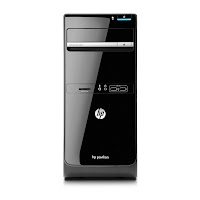
HP Pavilion P6 2390 Desktop Review

Jumat, 06 Juni 2014


HP Pavilion P6-2390 Desktop

HP Pavilion p6-2390 Desktop has just the right technology for tackling your every day needs, plus it delivers responsive, reliable performance, smooth HD video playback, HP Pavilion p6-2390 Desktop PC quicker web browsing and media playback. This desktop PC includes a DVD burner and a front-panel 6-in-1 media card reader. Its also HP Multi-Display capable, so you can work on two monitors at once.
you can buy HP Pavilion p6-2390 Desktop from many big retailers offline or online like amazon, Best buy, Target, Walmart etc, But which store is the best,we have done work for you, we find the best place to buy HP Pavilion p6-2390 Desktop PC at Amazon.com


HP Pavilion p6-2390 Desktop Features

  • Intel Pentium_G640|#Pentium G640 Processor 2.8 GHz (3 MB cache)
  • 4GB DDR3
  • 500 GB 7200 rpm Hard Drive0 GB Solid State Drive
  • Windows 8
  • Item dimensions 19.53 x 9.45 x 20.39 inches
For more info. about HP Pavilion p6-2390 Desktop PC Review Visit This Link


HP Pavilion p6-2390 Desktop Review Images

HP Pavilion P6-2390 Desktop ReviewHP Pavilion p6-2390 Desktop PC ReviewHP Pavilion P6-2390 Desktop


HP Pavilion p6-2390 Desktop Video


HP Pavilion p6-2390 Desktop 2nd best Seller in amazon.com on 21-11-2012


* CERTAIN CONTENT THAT APPEARS ON THIS SITE COMES FROM AMAZON SERVICES LLC. THIS CONTENT IS PROVIDED "AS IS" AND IS SUBJECT TO CHANGE OR REMOVAL AT ANY TIME.* This site is a participant in the Amazon Services LLC Associates Program, an affiliate advertising program designed to provide a means for sites to earn advertising fees by advertising and linking to amazon.com Amazon and the Amazon logo are trademarks of Amazon.com, Inc. or its affiliates.
Read More..

Android Review

Senin, 03 Februari 2014

Android is a Linux-based operating system for mobile phones like Smartphones and tablet computers. Android provides an open platform for developers to create their own applications for use by various devices moving. Initially, Google Inc. bought the Android Inc., a newcomer who made the software for mobile phones. Then to develop an Android, the Open Handset Alliance, a consortium of 34 companies for hardware, software, and telecommunications, including Google, HTC, Intel, Motorola, Qualcomm, T-Mobile, and Nvidia.

At the time of the release of Prime Android, November 5, 2007, with the Open Handset Alliances Android States support the development of open standards on a mobile device. On the other hand, Google released the code – Android code under the Apache license, a software license and open standard mobile device.
In this world there are two types of distributors operating system Android. First got full support from Google or Google Mail Services (GMS) and the second is correct – free distribution without direct support Google or known as the Open Handset Distribution (OHD).


History
In July 2005, Google collaborated with Android Inc., a company located in Palo Alto, California, United States. The founders of Android Inc. works on Google, of which Andy Rubin, Rich Miner, Nick Sears, and Chris White. At that time many consider Android Inc. is simply function as software on a cell phone. Since then it appears the rumors that Google is about to enter the mobile phone market. In the company of Google, the team led by Rubin is in charge of developing a mobile device that is supported by the Linux kernel. This shows indication that Google is preparing to face competition in the mobile phone market.
Around September 2007 a study reporting that Google filed a patent application in a mobile phone (finally Google introduces Nexus One, one kind of smart phones that use Android on a GSM system operations. A cell phone is manufactured by HTC Corporation and available in the market on January 5, 2010).
On December 9, 2008, it was announced the new members who join the program working Android ARM Holdings, Atheros Communications, Asustek Computer Inc, Garmin Ltd, Softbank, Sony Ericsson, Toshiba Corp, and Vodafone Group Plc. With the formation of the Open Handset Alliance, the OHA announced their first product, Android, mobile device (mobile) which is a modified Linux kernel 2.6. Since Android has done a variety of updates released in the form of bug fixes and the addition of new features.
The first phone that uses Android operating system was the HTC Dream, which was released on October 22, 2008. At the end of 2009 is estimated to be in this world there are at least 6 different types of mobile phones that use Android.

Android Version
Here is some version of the android operating system:
  • Android version 1.1/March 2009
  • Android version 1.5 (Cupcake)/may 2009
  • Android version 1.6 (Donut)/September 2009
  • Android version 2.0/2.1 (Eclairs)/December 2009
  • Android version 2.2 (Froyo: Frozen Yogurt)/may 2010
  • Android 2.3 (Gingerbread)/December 2010
  • Android version 3.0/3.1 (Honeycomb)/may 2011
  • Androidversion 4.0 (ICS: Ice Cream Sandwich)/October 2011

Features
Features available in Android is:
  • Application framework: it allows the use and removal of components available.
  • The Dalvik virtual machine virtual machine optimized for mobile devices.
  • Graphs: graphs in 2D and 3D graphics library based on OpenGL.
  • SQLite: for data storage.
  • Supports media: audio, video, and a variety of image formats (MPEG4, h.264, MP3, AAC, AMR, JPG, PNG, GIF)
  • GSM, Bluetooth, EDGE, 3 g, and WiFi (hardware dependent)
  • Cameras, Global Positioning System (GPS), compass, and accelerometer (hardware dependent)

Android has many advantages as a software that uses computer code base that can be distributed in an open (open source) so users can create new applications in it. Googles Android has native applications such as integrated pushmail, Google Maps, Gmail and Google Calendar.
Fans of open source community building then build and share Android-based firmware with a number of customizations and additional features, such as FLAC lossless audio and the ability to save the downloaded application on the microSD card. They often update the firmware packages and combines elements of Android functionality that has not been officially released in a carrier-sanction firmware.

Thank for visit Android Review..
Read More..

Code Review Checklist and Best practices in Java

Minggu, 02 Februari 2014

What to review while doing Code review
Code Review and Unit testing is one of best development practice I always recommend, strive for and enforce as much as possible. Even just by doing code review and Junit test case always offer positive result it can be improved a lot by constantly learning with our mistakes , others mistakes and by observing how others are doing it. I always try to get my code review by some one with more experience so that I can capture any domain specific scenario which has been missed during think through process and some with less experience so that he can improve his code readability, have a four eye check and most importantly I found that when i explain my code to some one as part of code review I myself discover many things which can be improved or left out.Overall it always add something and improve code quality and reduce bug.


code review checklist, code review best practicesI also review some one else code and voluntary take part to improve my code understanding ability and offer help to others, In this article I will list things which I look while doing code review. These are the things which I have been accumulated over the years but I also look forward to you guys to contribute your experience, best practices for code review and suggest how you guys do code review. These tips are independent of language and equally apply to Java, .NET or C++ code.

10 points checklist on Code Review


1) Does Code meet functional requirement: first and foremost does code meets all requirements which it should met, point out if anything has been left out.

2) Is there any Side effect of this change: Some time one change in your system may cause bug in other upstream and downstream system and it’s quite possible that new developer or anyone who is writing code might not be available of that dependency. This often directly related to experience in project and I found that the more you know about system and its environment better you able to figure this out.

3) Concurrency: does code is thread-safe? Does it have properly synchronized if using shared resource? Does it free of any kind of deadlock or live-lock? Concurrency bugs are hard to detect and often surfaces in production. Code review is one place where you can detect this by carefully understand design and its implementation.

4) Readability and maintenance:  does code is readable? Or is it too complicate for some-one complete new. Always give value to readability as code is not just for this time it will remain there for long time and you need to read it many times. Another important aspect is maintenance as most of software spends 90% time in maintenance and only 10% time on development it should be maintainable and flexible in first place. You can verify that whether code is configurable or not, look for any hard coding, find out what is going to be changed in near future etc.

5) Consistency: This is part of point 4 but I have made it another separate point because of its importance. This is the best thing you can have in your code which automatically achieves readability. Since many developer and programmer take part in project and they have there own style of coding, it’s in best interest of everybody to form a coding standard and follow it on letter and spirit. For example it’s not good someone using function initialize() and other is using init() for same kind of operation, keep you code consistent and it will look better, read better.

6) Performance: Another important aspect most important if you are writing high volume low latency electronic trading platform for high frequency trading which strives for micro second latency. Carefully monitor which code is going to execute at start-up and which is going to be executed in loop or multiple times, optimize the code which is going to execute more often.

7) Exception handling: Ask does code handles bad input and exception? It should and that too with predefined and standard way which must be available and documented for support purpose. I put this point well above on my chart while doing review because failing on this point can lead your application crash and not able to recover from fault on other system or other part of same application.

8) Simplicity: Always see if there is any simple and elegant alternative available at-least give a thought and try. Many times first solution comes in mind is not best solution so giving another thought is just worth it.

9) Reuse of existing code: See if the functionality can be achieved by using existing code, advantage of doing this is that you are using tried and tested code which reduce your QA time and also give you more confidence. Introducing new libraries introduce new dependency. I prefer not to try anything fancy until it’s absolutely necessary.


10) Unit test: Check whether enough JUnit test cases have been written and cover sufficient percentage of new code. never let you pass the code without Junit test because developer often make excuse of time but believe me its worth to write it.

Not last but least that put a comment on your java file that by whom it has been reviewed, what issue finds are out and status of those. This will make the whole process official and ensures that due diligence would be applied during code review. Its also good to maintain your own code review checklist or a project wise code review checklist and use it every time while doing review. There are so many best practices but I have only included those which I follow and found interesting but as I had said earlier this is the area which always needs improvement and no body is perfect on that. So please contribute your ideas on code review and effective development.

Enjoy

Some older post you may like

Read More..